
If you drive for a rideshare or delivery platform in Australia, you already know how quickly the numbers pile up. Fares, platform fees, fuel receipts, phone bills, and quarterly BAS lodgements all demand attention at once. One transposed figure, one missed receipt, or one incorrectly coded expense can put your GST claim offside with the Australian Taxation Office (ATO), triggering penalties or an audit. The good news is that financial automation is changing how drivers manage all of this, cutting out the manual steps where most errors actually happen.
Table of Contents
- Why manual financial management leads to errors
- How financial automation minimises GST and BAS errors
- Key automation features for rideshare and delivery drivers
- The limits of automation: Substantiation and edge cases
- Why automation is necessary but not a silver bullet for drivers
- Streamline your GST compliance with smart automation tools
- Frequently asked questions
Key Takeaways
| Point | Details |
|---|---|
| Automation cuts manual entry | Automated systems significantly reduce GST errors by minimising manual data entry and applying validation rules. |
| Ongoing reconciliation is crucial | Regular, automated reconciliations help catch missed or duplicated GST transactions early. |
| Expense apportionment is essential | Even with automation, correct splitting between business and personal expenses and supporting records are required by the ATO. |
| Automation is not a substitute | Automation streamlines processes but doesn’t replace sound workflow design or proper substantiation. |
| Specialised tools simplify compliance | Using the right automation tools tailored for drivers makes GST tracking and compliance much easier. |
Why manual financial management leads to errors
Most drivers start out tracking their income and expenses in a spreadsheet or a notes app. It feels manageable at first. Then the receipts stack up, the quarters blur together, and suddenly you are trying to reconstruct three months of fuel purchases from memory the night before your BAS is due.
The core problem is not laziness. It is the way manual systems are built. Spreadsheets require you to enter data correctly every single time, with no guardrails to catch a wrong figure or a missing GST code. One fat-fingered amount in a formula can cascade into a completely wrong GST estimate without you ever noticing.
The risks of manual tracking include:
- Missed receipts that reduce your legitimate GST credits
- Duplicated entries from copying data across multiple files
- Incorrect GST codes applied to expenses that are either fully taxable, GST-free, or input-taxed
- Delayed reconciliation that lets errors sit undetected until BAS time
- Apportionment mistakes where personal and business use of an asset are blended incorrectly
There is a broader concept at play here called operational debt. This is the hidden cost your business accumulates when controls are applied after the fact rather than embedded in the process itself. As one finance industry analysis explains, manual finance workflows create operational risk by eliminating spreadsheet-dependent workflows, relying on human memory, and doing control checks as after-the-fact review rather than embedded validation.
"Automation also reduces the operational risk that drives errors by eliminating spreadsheet-dependent workflows, relying on human memory, and doing control checks as after-the-fact review rather than embedded validation."
For drivers, this operational debt shows up as scrambled records at BAS time, incorrect GST credits, and the very real risk of ATO scrutiny. Exploring the GST automation benefits available to drivers today makes it clear why so many are moving away from manual methods.
How financial automation minimises GST and BAS errors
Understanding these risks, let's examine how automation actually works to minimise errors.
Financial automation does not just speed things up. It fundamentally changes where errors can enter the process. Instead of relying on you to enter data correctly after the fact, automated systems capture transactions at the point they occur and apply validation rules immediately. This means a miscoded expense gets flagged before it ever reaches your BAS, not after you have already lodged it.

Research into common GST mistakes in Australia confirms that financial automation reduces GST and BAS bookkeeping errors mainly by cutting manual data entry, enforcing validation rules at the point transactions are captured, and reducing mismatches through reconciliation.
Here is how the process works in practice:
- Transaction capture — Income from your platform and expenses like fuel or phone bills are recorded automatically, removing the need for manual entry.
- Validation at source — The system checks that each transaction has a GST code, a category, and a supporting record before it is accepted.
- Categorisation — Expenses are sorted into the correct buckets automatically, whether that is vehicle costs, communication expenses, or platform fees.
- Reconciliation — The system cross-checks your records against bank data or platform summaries to flag duplicates or gaps.
- BAS estimation — Once your income and expenses are correctly categorised, the system calculates your GST payable for the quarter without you needing to do the maths yourself.
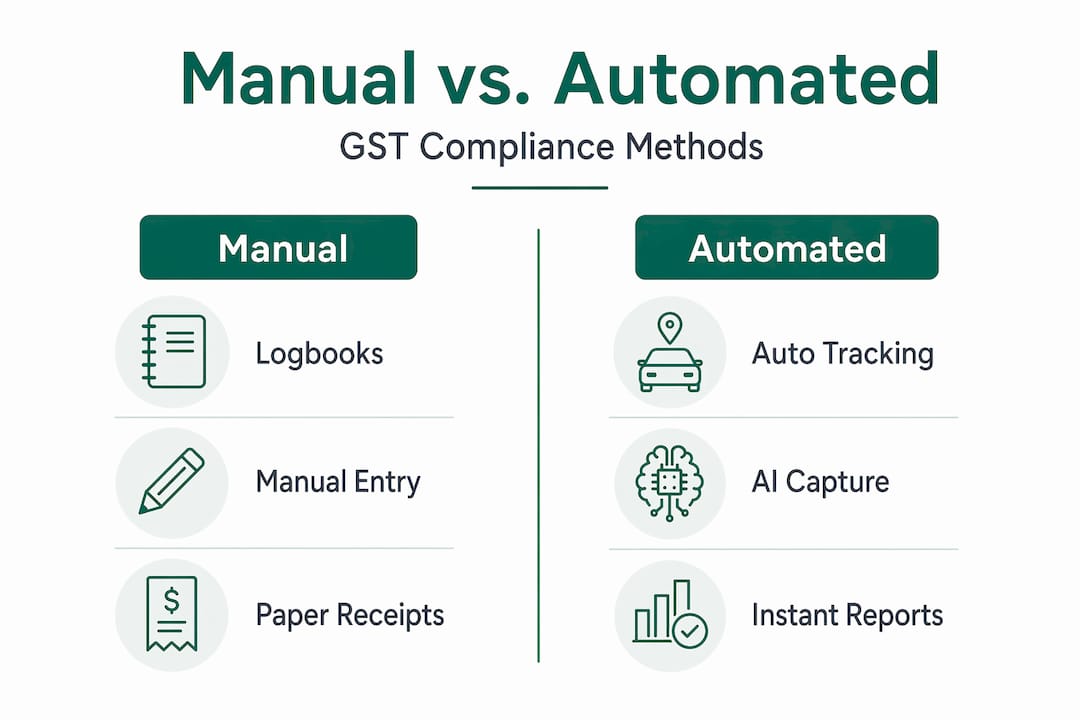
Comparing manual versus automated GST tracking:
| Task | Manual approach | Automated approach |
|---|---|---|
| Receipt capture | Photographed or saved manually | AI scans and extracts data instantly |
| GST coding | Applied by driver, error-prone | Applied automatically by category rules |
| Reconciliation | Done at BAS time, often rushed | Ongoing, flags issues immediately |
| Apportionment | Estimated from memory | Calculated from logged business use |
| BAS preparation | Manual totalling, high error risk | Auto-calculated from verified data |
Pro Tip: Set up your automatic GST tracking categories at the start of each financial year, not mid-year. Correcting miscategorised transactions in bulk is far more time-consuming than getting the setup right from day one.
Key automation features for rideshare and delivery drivers
Now that we know automation's core value, let's look at the specific features that matter for drivers.
Not all automation tools are built with rideshare and delivery drivers in mind. Generic accounting software often lacks the specific categories, apportionment tools, and BAS estimation features that gig economy workers need. Here is what to look for.
The ATO's own guidance is clear on this point. Ride-sourcing drivers need tools that track income and expenses during the year to support accurate reporting, because the ATO requires you to keep records and apportion expenses correctly between business and private use.
Essential automation features for drivers:
| Feature | What it does | Why it matters |
|---|---|---|
| Income tracking | Records platform earnings automatically | Ensures all taxable income is captured |
| Receipt scanning | AI reads and categorises receipts | Eliminates manual data entry errors |
| GST code assignment | Applies correct tax treatment per category | Prevents incorrect credits or omissions |
| Expense apportionment | Splits costs between business and personal use | Ensures only legitimate GST credits are claimed |
| BAS estimation | Calculates quarterly GST payable | Removes manual calculation risk |
| CSV export | Exports records for your accountant or ATO | Supports substantiation and audit trails |
The features that drivers most commonly overlook are expense apportionment and ongoing reconciliation. Many assume that capturing a receipt is enough. But if your vehicle is used for both personal and business trips, only the business-use percentage of vehicle expenses can be claimed as a GST credit. An automated system that calculates this split based on your actual trip logs is far more accurate than an estimate you make at tax time.
Key benefits of tracking driver expenses with purpose-built tools include:
- Real-time visibility into your GST position throughout the quarter, not just at lodgement time
- Audit-ready records that include supporting documents for every claimed expense
- Reduced stress at BAS time because the work is already done
- Fewer errors because validation happens continuously, not in a last-minute review
The limits of automation: Substantiation and edge cases
As we explore features, it is crucial to know where automation meets its limits and how to manage them.
Automation is genuinely powerful, but it is not a complete substitute for correct setup, good habits, and sound judgement. This is the part most drivers miss when they first switch to an automated system. They assume the tool will handle everything. It will not.
The most common edge case for ride-sourcing GST accuracy is expense apportionment and substantiation. Even automated systems still require correct business-use percentages and supporting records, otherwise deductions or GST credits can be wrong.
Think about what this means in practice. If you tell your tracking app that 80% of your vehicle use is for business but your actual trip logs show 60%, your GST credits will be overstated. The automation faithfully applied the wrong input. The ATO does not accept "my app calculated it" as a defence for an inaccurate claim.
Pro Tip: Keep a logbook for at least 12 continuous weeks every year to establish your business-use percentage for automating GST substantiation. This gives you a defensible, ATO-compliant figure to feed into your automated calculations.
The same principle applies to supporting records. Tax invoices for expenses over $82.50 (including GST) must be held on file. Automation can remind you to capture them and store them digitally, but you still need to actually obtain them from your supplier.
Areas where automation still requires your attention:
- Business-use percentage for vehicles, phones, and home office expenses
- Tax invoices for expenses above the $82.50 threshold
- Platform income summaries that need to be reconciled against your own records
- One-off or unusual expenses that may not fit standard categories
- GST-free versus taxable distinctions for specific purchases
The insight from finance operations research reinforces this: automation reduces error risk, but it does not magically fix poor workflow design. Manual exception handling and after-the-fact controls can still leave operational debt unless validations are embedded in the process.
Statistic to note: The ATO's data consistently shows that incorrect GST apportionment and missing substantiation are among the top reasons rideshare drivers face adjustments after a BAS review. Automation handles the routine transactions well. The edge cases still need you.
Why automation is necessary but not a silver bullet for drivers
Here is a perspective that most articles on this topic will not give you. The conversation around automation tends to split into two camps. The first says automation will solve all your GST problems. The second says nothing replaces a good accountant. Both miss the point.
Automation is not a product you buy and forget. It is a discipline you build into your workflow. The drivers who benefit most from automated tools are not the ones who set it up once and walk away. They are the ones who treat it as a living system, checking their categorisations regularly, updating their business-use percentages when their driving patterns change, and making sure every receipt is captured at the time of purchase rather than weeks later.
The real value of automation is that it removes the cognitive load from the routine tasks. You should not be spending mental energy remembering whether a fuel receipt was for a business trip or a personal one. Your system should record that at the time. That frees you to focus on the genuinely complex decisions, like whether a particular expense is legitimately business-related or how to handle a mixed-use asset.
The ATO's own guidance frames it well. Treating automation as record-keeping support means using it to track income and expenses year-round, capture receipts and logs, and apportion correctly, rather than as a replacement for understanding GST rules and substantiation requirements.
The drivers who get into trouble are not the ones who use automation. They are the ones who use automation as a shortcut and stop engaging with their own numbers. If you do not understand why your GST payable is what it is, you cannot catch it when something goes wrong.
The contrarian truth is this: a well-designed automated system with a disciplined driver behind it will outperform any manual system or any automated system left to run on autopilot. The tool is only as good as the person using it.
Streamline your GST compliance with smart automation tools
Managing your GST as a rideshare or delivery driver does not have to mean late nights with a spreadsheet and a pile of receipts. The insights in this article show that automation handles the heavy lifting when it is set up correctly and used consistently.
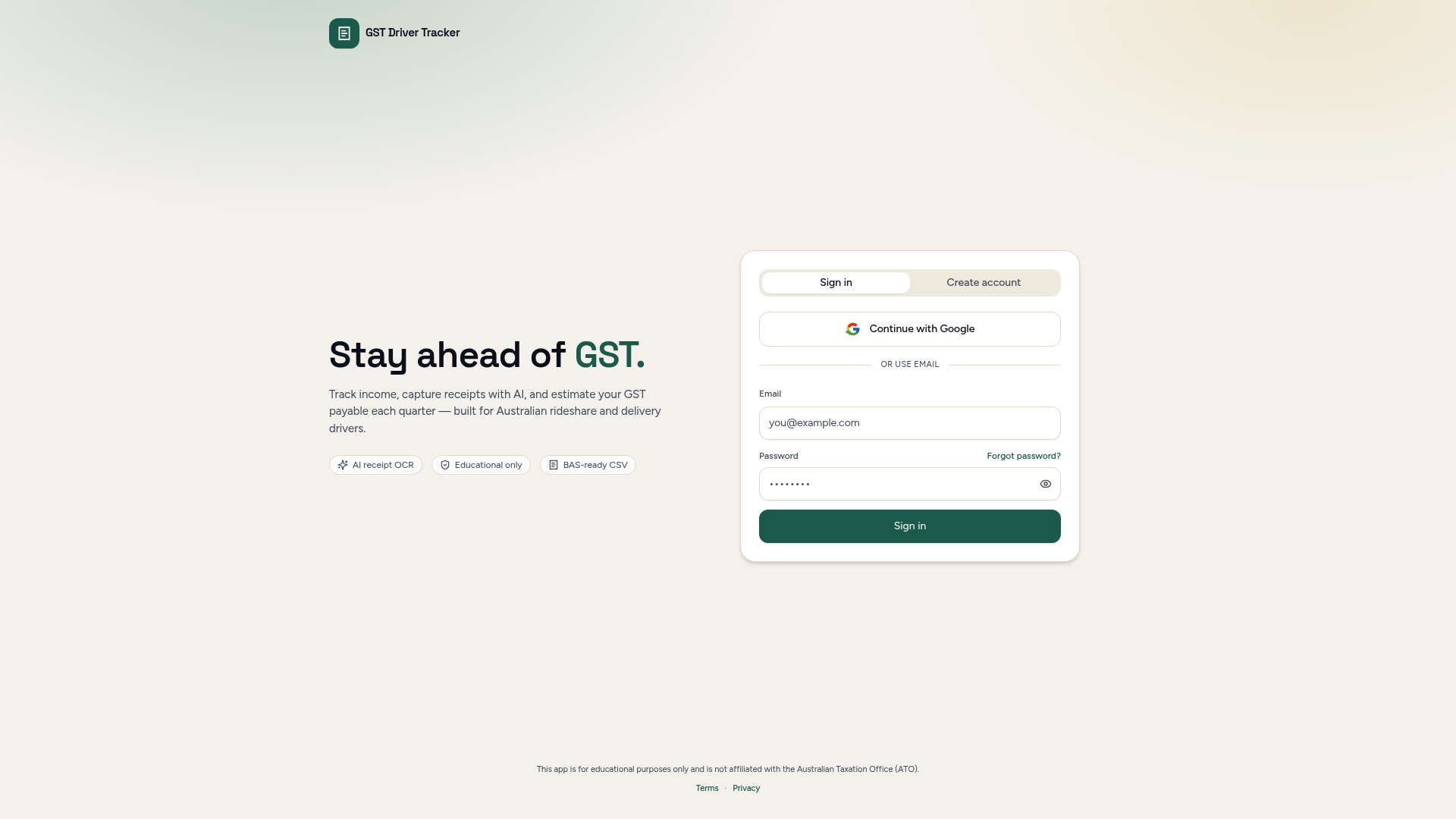
GST Driver Tracker is built specifically for Australian rideshare and delivery drivers who want to get started with GST automation without the complexity of generic accounting software. The platform tracks your income and expenses, uses AI to capture receipt data, estimates your quarterly GST payable, and exports your records in CSV format for easy BAS preparation. It is designed to support the exact compliance requirements covered in this article, from correct GST coding through to expense apportionment and substantiation. If you are ready to replace the manual guesswork with a system that works for you, GST Driver Tracker is your starting point.
Frequently asked questions
How does automation reduce GST errors for drivers?
Automation minimises GST errors by capturing transactions accurately at the point they occur, enforcing correct tax codes automatically, and running ongoing reconciliation to catch mistakes before they reach your BAS lodgement.
What records does the ATO require for rideshare drivers?
The ATO requires you to keep records for all income and expenses and to correctly apportion expenses between business and private use, including tax invoices for purchases above $82.50 including GST.
Can automated software completely prevent GST mistakes?
Automation reduces most routine errors but cannot substitute for correct workflow design, accurate business-use percentages, or valid supporting records. Poor workflow design still creates compliance gaps even in automated systems.
What automation features are most important for GST compliance?
The most important features are automatic income and expense tracking, correct GST code assignment, regular reconciliation, and tools that calculate expense apportionment using actual trip records rather than estimates.